

How direct should you be when communicating?
I’ve gotten this wrong in both directions. Too soft, and nothing changed. Too hard, and people got defensive or shut down entirely.
For example: Someone’s not delivering. You mention it once, gently. Then again. You offer to help. Nothing changes. You could be more direct, but you don’t manage them. You hope they’ll self-correct. They don’t.
Or the flip side: you’re frustrated, so you finally say the thing, and say it too strongly. They get defensive. The conversation goes nowhere.
Either way, the outcome you wanted didn’t happen.
So how do you adjust the intensity of your communication? Not just what you say, but how strongly you say it?
Thank you Jellyfish for sponsoring today’s article!
Most AI dev tool rollouts look like buying all the ingredients and hoping a meal appears. Everyone’s experimenting, nobody’s coordinating, and when leadership asks about ROI the best answer is “it feels faster?” That’s not cooking. That’s just grocery shopping.
Groceries don’t become dinner on their own. But everyone wants to skip straight to the eating. The actual work? Telemetry, training, accountability, and the willingness to make real organizational changes, not just buy more licenses.
Ingredients don’t make a meal. Process does. If your AI rollout feels scattered, get help from Jellyfish, the Intelligence Platform for AI-Integrated Engineering.
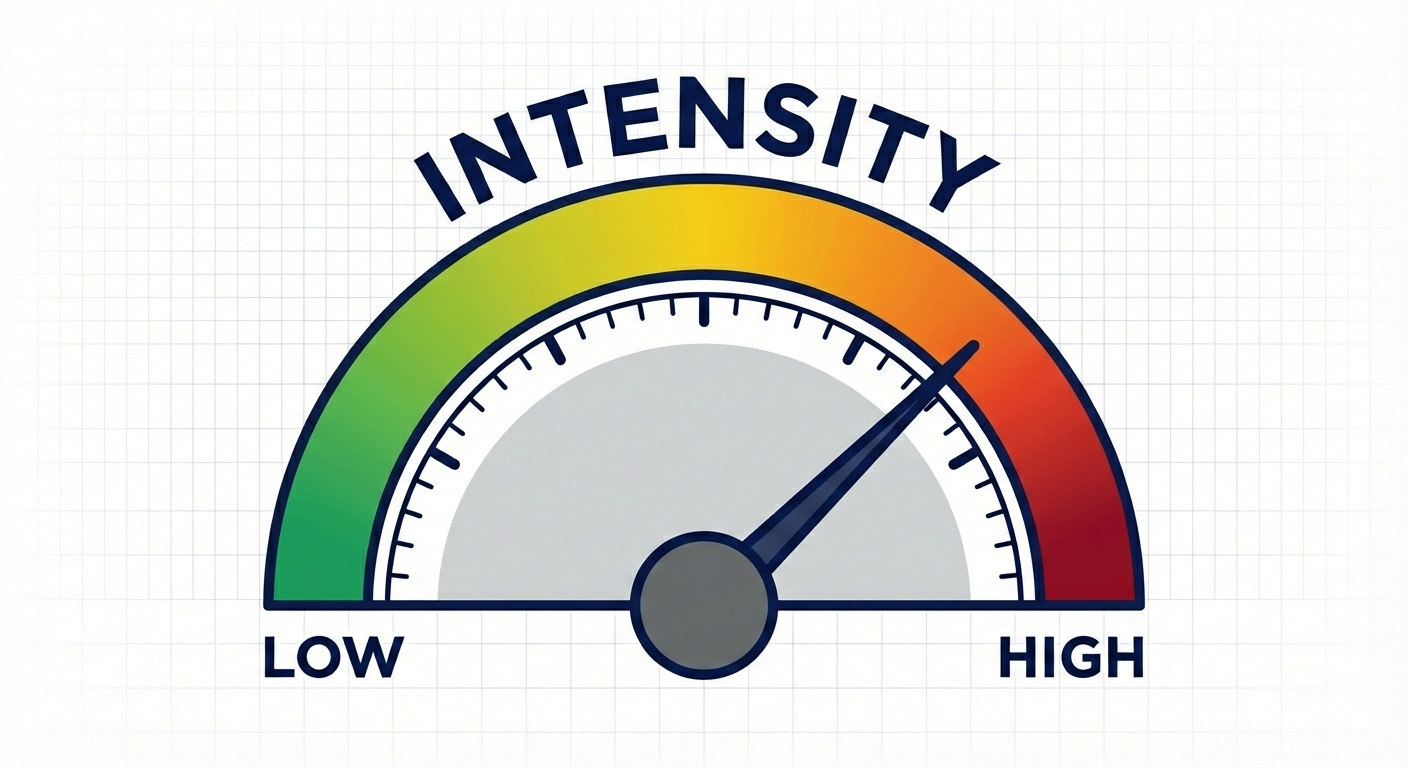
I think of communication as an intensity dial. On the low end: support, gentleness, patience. On the high end: clarity, urgency, directness. Most conversations live somewhere in between.
In today’s article, you’ll learn what happens at both extremes (and why we get stuck there or bounce from one extreme to another), how to find the right level of intensity for the moment, and how to move the dial gradually without going 0 to 100 and torching the relationship.
When the intensity is too low
Here’s an example from my coaching practice. A client of mine had just been laid off. We were working together to get him ready for interviews. I knew it was a hard moment.
The first week, he hadn’t done much prep. I was understanding and said: “Totally understandable, I know how emotionally taxing this whole experience has been. Let’s regroup next week”. The second and third week, same thing. I let it slide again.
By the fourth week, still no progress. That’s when I realized the intensity I was communicating was too low. My job as a coach was to help him get a new job, and we were not making progress. I had to elevate the intensity, so I said: “I don’t think you’re taking this process seriously. And I’m worried.”
That’s what it means to adjust the dial. I didn’t go in hard from day one. But after two weeks of soft nudges not landing, it was time to turn it up. I wasn’t trying to scare him, but I had to be direct. The softness wasn’t helping anymore. It was just creating space for avoidance.
Ways this shows up in Tech:
You give feedback in a 1:1, but wrap it in so much cushion that the person walks away thinking they’re doing fine.
Someone’s coasting. You soften the message: “Maybe this isn’t the right project for you?” But underneath, the real message is: this isn’t good enough.
You keep waiting for “the right moment” to have the hard conversation. The right moment never comes.
When we’re soft, we tell ourselves we’re being empathetic. But often, we’re just avoiding discomfort. Ours and theirs.
And if we stay soft for too long, resentment creeps in. You keep things polite on the surface, but underneath, you’re irritated. That’s when the passive-aggressive behaviors start: pointed comments, vague frustrations, performance nitpicks that come out of nowhere. The real conversation still isn’t happening, but now the tension is.
Enjoying this article? Hit the ❤️ button or share it with a friend or coworker. 🙏🏻
When the intensity is too high
High intensity has its own failure mode. You’re clear, direct, no-nonsense. But you come in too strong, too early, or with too little context.
I learned this one the hard way. When I was a first time tech lead at Google, someone on the team had written a poor oncall runbook. Instead of talking to them first, I criticized it publicly. In a group setting. I thought I was being direct and efficient, just flagging a problem so we could fix it. What I actually did was embarrass them in front of the team.
The runbook got fixed. But something else broke. That person stopped bringing ideas to the table. They got quieter in meetings. It took months to rebuild the trust, and honestly, I’m not sure I ever fully did.
That’s what “too intense” looks like. You might be right about the problem. But the way you surface it makes it impossible for the other person to hear it.
Other ways this shows up:
Jumping into feedback before the other person even knows there’s a problem
Letting things slide, then unloading all your feedback at once. It feels like an ambush.
Bringing feedback that could’ve been shared 1:1 for the first time in front of others
Suddenly escalating your tone because frustration has been building under the surface
When people get defensive or shut down, the focus falls on how you said things, not what you said. There is no productive conversation to be had then.
The middle range most people skip
Intensity isn’t binary. It’s not “soft” or “hard.” It’s a gradient, and the skill is learning how to move through it deliberately.
For simplicity, let’s assume in the next paragraphs that intensity dial has a scale from 0 to 10.
Most people get stuck at the extremes. They camp out at level 1-2, hinting, asking open-ended questions, sugar-coating. And when that doesn’t work, and more time goes by, they jump straight to level 8 out of frustration. The middle gets skipped entirely.
The skill is controlling the dial. Moving from 3 to 5 when the first conversation didn’t land. Holding at 5 for another week to give it time. Recognizing when the situation actually calls for 7. Each turn of the dial sends a signal: this matters, and I need you to hear it.
Here’s what that looks like in practice. I specifically picked situations where you don’t have authority, but you’re still accountable for outcomes, because I found these to be what challenge people the most. The intensity increases as the issue keeps resurfacing.
Situation #1: Peer consistently missing 1-1s or breaking commitments to you
🟢 “Hey, I noticed we had to reschedule our 1-1 again. Want to find a time that works better?”
🟡 “I feel like we keep missing our sync time. These conversations are important for [specific reason]—can we prioritize them?”
🟠 “We’ve rescheduled three times this month. I need these check-ins to stay aligned on [project/dependency].”
🔴 “I’m going to be direct: when we keep canceling, it makes it hard for me to do my part effectively. I need us to either commit to this time or find a different approach.”
⚫ “If we can’t find a way to stay connected regularly, I’ll need to bring [manager/project lead] in to help us figure out a structure that works.”
Situation #2: Architectural concerns being dismissed
🟢 “Can we spend a bit more time on the long-term implications?”
🟡 “I’m concerned we’re trading short-term speed for long-term maintainability.”
🟠 “We’ve seen this pattern cause [specific problem] on [past project], and I’m worried we’re heading toward the same outcome.”
🔴 “As the person who’ll be maintaining this, I need us to be explicit about the technical debt and operational risk we’re accepting.”
⚫ “I can’t sign off on this without documenting my concerns. If we’re not aligned on risk tolerance, this needs to go to [CTO/VP Engineering].”
Situation #3: Another team blocking progress
🟢 “Can you help me understand your team’s priorities around this?”
🟡 “This dependency is on our critical path for [specific milestone], and we’re currently blocked.”
🟠 “It’s been [X weeks], and we’re at the point where this is affecting our [Q1 release/customer commitment].”
🔴 “Without this by [specific date], we will miss [specific commitment]. I need a clear commitment or an alternative path forward.”
⚫ “If we can’t get [specific deliverable] by [date], I’m escalating to [VP/shared manager] that we’re missing [commitment] due to this dependency.”
Please note that none of these starts confrontational. They earn their intensity over time. Each step removes ambiguity, becomes more and more straightforward, and gets clearer about how serious the impact is.
To help you practice dialing your intensity dial, check out the bonuses at the end of the article.
Conclusion
When something matters enough to repeat, it matters enough to say differently.
The dial is there to use. Turn it deliberately. Match the intensity to the stakes, and you’ll get through.
Until next time,
Irina Stanescu
Did you enjoy this article? Hit the ❤️ button or share it with a friend or coworker. 🙏🏻
🎁 Bonus #1: 4 Questions to know where to turn the dial
Have I had this conversation before without change? If yes, you’re probably too soft. Repetition without intensification doesn’t tell people the issue is serious.
If I asked them to rate how serious this is, would their number match mine? If theirs is lower, your message isn’t landing. If theirs is higher, you might be coming in hotter than you realize.
Have I given them a real chance to correct before escalating? Change takes time, so turning the dial needs to be gradual if you want to be fair to the other person.
If someone said this to me at this intensity, would I hear the message or feel attacked? If you’d feel attacked, then don’t say it, no matter how frustrated you are. It’s not an excuse.
